 3 months ago
74
3 months ago
74
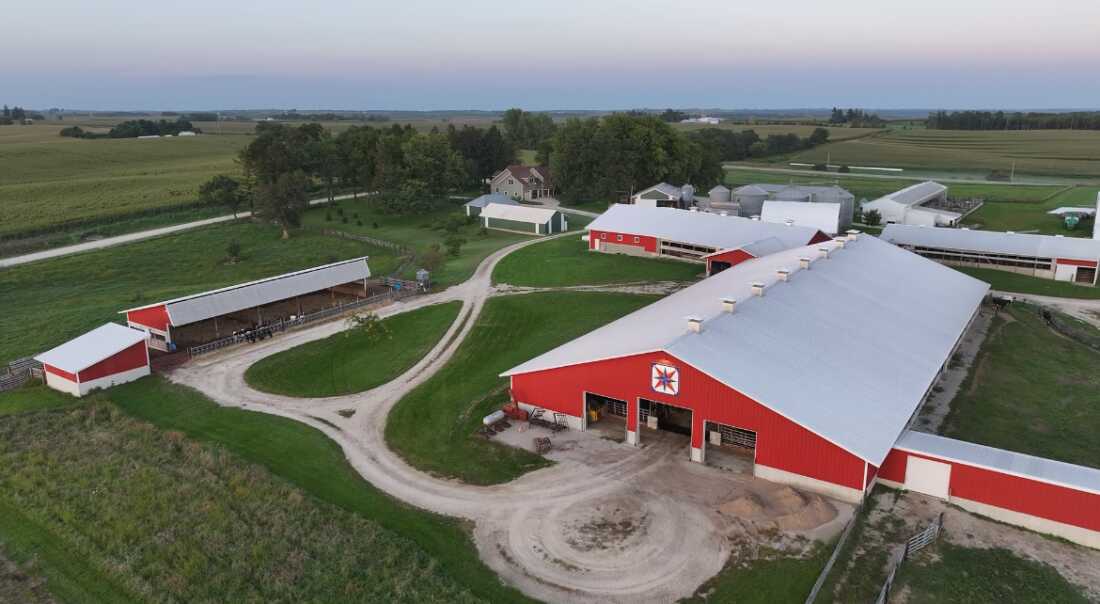
Prairie Star Farm in Allamakee County, Iowa is home to 180 dairy cows. Owners Meghan and John Palmer say growing health care costs add to the financial pressures facing many farm families, including theirs.
Meghan Palmer hide caption
toggle caption
Meghan Palmer
It's been a tough year for farmers. Between falling prices for commodity crops like corn and soybeans, rising input costs for supplies like fertilizer and seeds, the Trump tariffs and the dismantling of USAID, many in agriculture won't be profitable this year.
The enhanced subsidies that many Americans, including farmers, rely on to purchase health insurance are set to expire at the end of this month.
James Davis, 55, who grows cotton, soybeans and corn in north Louisiana, said he doesn't know how he and his wife will afford coverage next year, when their insurance premium will quadruple, jumping to about $2,700 a month.
"You can't afford it. Bottom line, there's nothing to discuss. You can't afford it without the subsidies," Davis said.
More than a quarter of the agricultural workforce purchases health insurance through the individual marketplace, according to an analysis from KFF, a nonprofit health policy research organization.
That 27% rate is much higher than the overall population — only 6% of U.S. adults have non-group coverage.

Farmers are used to facing challenges like unpredictable weather and fluctuating commodity prices. But the loss of the enhanced subsidies, coupled with the challenging economic conditions, will make coverage unaffordable for many.
Without major intervention from Washington, farmers say they'll have to choose between being uninsured or leaving the farm work behind for a job that offers health insurance.
Forgoing insurance is a bad gamble for farmers
Farming is dangerous work. Agricultural workers spend much of their time outside and exposed to the elements. Many of their duties can lead to injury or illness: they drive and operate heavy machinery, work with toxic chemicals, and handle large animals.
Work-related deaths are seven times higher for farmers than the national average.

Close-up of a cotton boll on a farm in Richland Parish in northern Louisiana. Drew Hawkins hide caption
toggle caption
Drew Hawkins
The financial toll of non-fatal farm injuries is also significant. A study from the University of Nebraska Medical Center found that the average cost of a farming injury was $10,878 in medical care and $4,735 in lost work.
It's essential that farmers can purchase comprehensive insurance, said Florence Becot, a rural sociologist and associate professor in agricultural health and safety at the Pennsylvania State University where she studies the social and economic needs of farm households.
In a 2022 study, Becot found that more than 20% of U.S. farmers had medical debt exceeding $1,000, and more than half were not confident they could cover the costs of a major illness or injury.
"That shows you the level of vulnerability and concerns that farmers are facing," she said.
Mental health is also a concern. Farmers are roughly twice as likely to die by suicide compared to the general population. Mental health hotlines that serve rural communities are seeing an uptick in calls this year.
These concerns around farmers' increased emotional distress coupled with a rise in bankruptcies conjures memories of the farm crisis of the 1980s, according to Michael Klein of the industry group USA Rice. During that decade, there was a raft of foreclosures and hundreds of farmers took their own lives.
"We're really afraid of what's going to happen," Klein said.
Farmers can be reluctant to admit that they rely on government-subsidized insurance, said Meghan Palmer, 42, who runs a dairy farm in northeast Iowa with her husband, John, 45.
"We're not handout takers," said Palmer.
Among dairy farmers, more than 40% lack health insurance — one of the highest uninsured rates throughout all agricultural sectors.

Prairie Star Farm has been in Meghan Palmer's family for three generations. She hopes that one day one of her kids will want to take over operations, but it's getting harder for a farm to be profitable.
Meghan Palmer
hide caption
toggle caption
Meghan Palmer
But going uninsured is not an option for the Palmers.
During their first year of marriage, the couple recalled being uninsured and having to pay out-of-pocket for two unexpected health crises: Palmer had an appendectomy, and her husband John needed stitches after getting kicked in the face by one of his cows.
"It was stupid of us," said Palmer of the decision to forgo coverage.
But next year, the combined out-of-pocket monthly cost of their plans will increase by more than 90%, to $368.18. For both, their 2026 deductible is $7,200.

Palmer has started to search for an off-farm job, though she anticipates that whatever she earns will mostly pay for additional insurance costs and there will be little left over. In addition, her absence would create a greater burden for her husband, which worries her.
"John is working exhausted most of the time," she said. "That's when mistakes get made and you end up in the ER."
Political consequences
Even after the enhanced subsidies go away in 2026, the Palmers estimate their income will still be low enough that they'll qualify for some tax credits to purchase coverage.
However, another change in health care is that repayment limits are being eliminated, so if the Palmers have a surprisingly profitable 2026, they'll be forced to pay some, if not all, of that subsidy back at tax time.
A farmer's income can vary drastically year-to-year, said Becot, partly because commodity prices can fluctuate rapidly.
Some farmers might deliberately choose to not grow their businesses, because too much profit might cause them to lose access to health care subsidies.
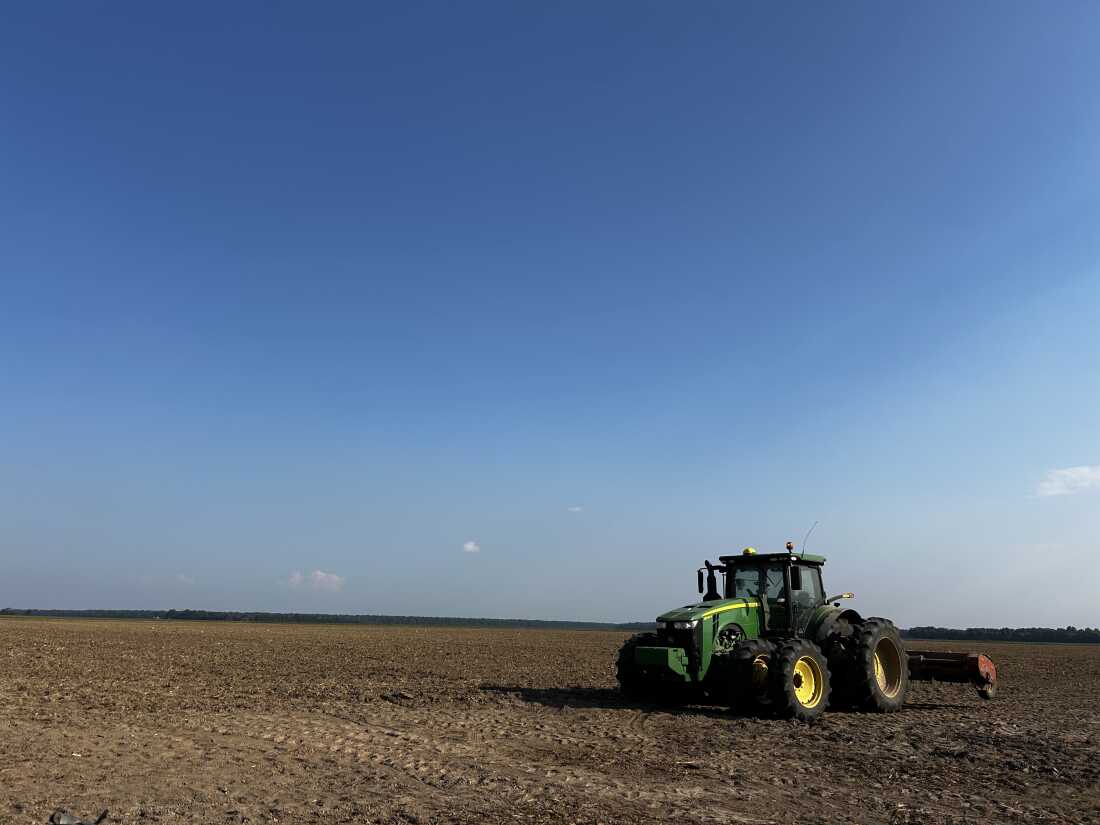
A tractor in Richland Parish, Louisiana. Drew Hawkins hide caption
toggle caption
Drew Hawkins
Farmers who are insured through Medicaid have similar concerns, Becot said. Prioritizing health care affordability by suppressing operational growth will have long-term consequences for a farm's success.
Palmer, in Iowa, and Davis, in Louisiana, are both upset that lawmakers aren't more sensitive to the economic demands of farming and how those have coincided with rising health costs.
Trump did recently pledge $12 billion in one-time bridge payments to row crop farmers, but that's not going to stop health care costs from ballooning.
Republicans are aware that health care is a problem and have put forth proposals, said Donna Hoffman, a political scientist at the University of Northern Iowa, via email. But most don't support extending the enhanced ACA subsidies because they don't see subsidies as a good solution to the problem of rising health care costs.
This story comes from NPR's health reporting partnership with KFF Health News.