 3 months ago
104
3 months ago
104
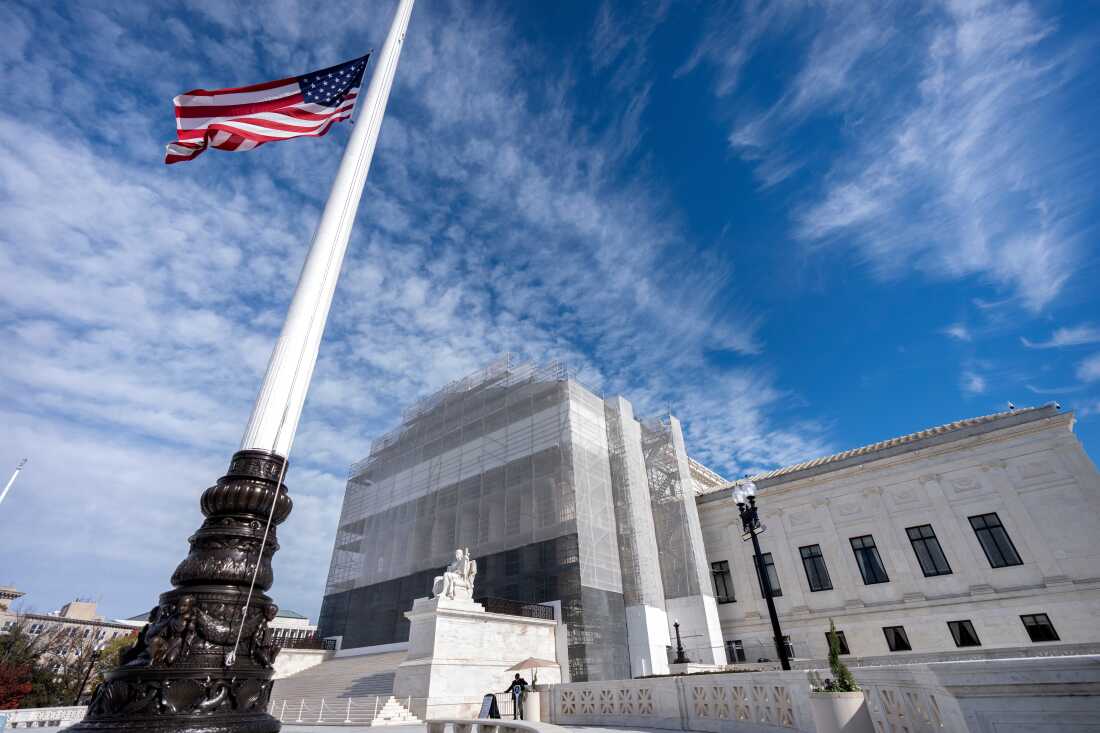
An American flag is seen outside the Supreme Court, in Washington, D.C., in November. This week, the high court will hear oral arguments for a case that could change who gets to be a U.S. citizen. Mark Schiefelbein/AP hide caption
toggle caption
Mark Schiefelbein/AP
At a recent U.S. Senate subcommittee hearing on birthright citizenship, Republican lawmakers argued that the legal principle granting automatic citizenship to nearly everyone born on American soil is not just a constitutional or immigration issue: It's also a matter of fraud and national security.
"The question before us today is a simple one: Is American citizenship the inheritance of a nation and its people? Or is American citizenship simply a hollow legal definition without protections against fraud, abuse, and bad actors?" Sen. Eric Schmitt, R-Mo., said during a hearing held by the Senate Judiciary Subcommittee on the Constitution earlier this month.
Schmitt was pointing to concerns that birthright citizenship leads to "birth tourism," a controversial practice in which foreigners who are pregnant travel to the U.S. to give birth as a way to obtain American citizenship for their child. Over the years, federal authorities have uncovered lucrative businesses that charge tens of thousands of dollars for birth tourism services.
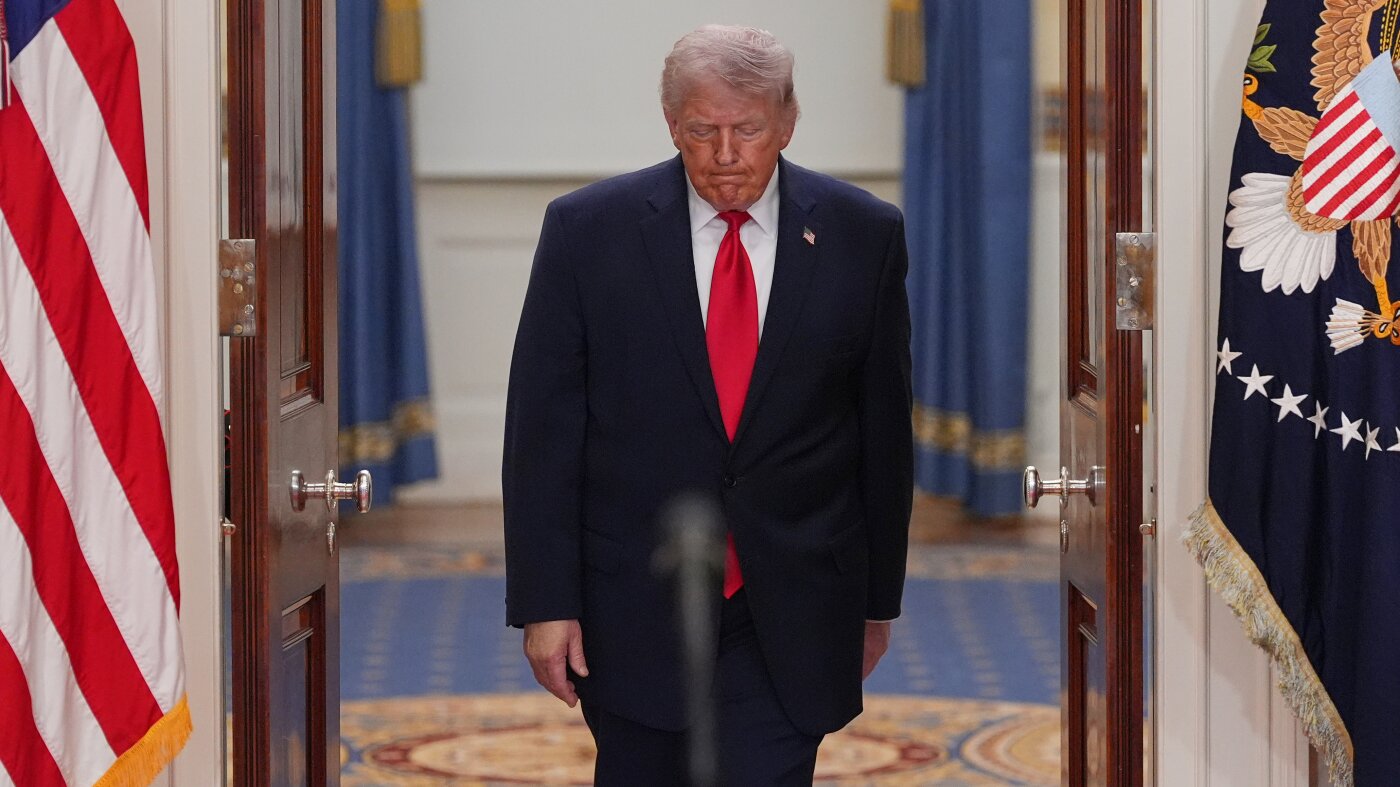
A Supreme Court case that could end birthright citizenship has recently thrust the issue into the spotlight. On Wednesday, the nation's highest court will hear oral arguments about the constitutionality of President Trump's executive order declaring that children born in the U.S. to parents who are in the country illegally or temporarily will no longer be considered American citizens.

His order seeks to upend over 125 years of understanding that the 14th Amendment to the Constitution grants citizenship to anyone born in the U.S. except for children of foreign diplomats and those born to a foreign occupying force.
Trump and others pushing to curb immigration frequently cite the birth tourism industry as a clear example of how birthright citizenship can be exploited and therefore, needs limitations. Meanwhile, immigration advocates argue the issue has been blown out of proportion and does not justify undermining birthright citizenship.
" You don't kill a mosquito with a cannon. It's a problem but you don't need to revisit a 150-year-old constitutional amendment to address occasional incidents of fraud," Muzaffar Chishti, a senior fellow at the non-partisan Migration Policy Institute, told NPR.
The concern over fraud
Visiting the U.S. while pregnant is not illegal, but federal authorities say willfully misrepresenting the purpose of travel can be considered visa fraud. Over the years, a cottage industry of businesses have offered services that have included coaching clients on how to lie about their length of stay or how to conceal their pregnancies from immigration authorities.

Trump has already tried to crack down on this issue. During his first term, the Trump administration instructed the State Department to deny tourist visas to pregnant women if officials believed they were engaging in birth tourism. In a 2022 report, the Senate Committee on Homeland Security found that the 2020 State Department policy change made it more difficult for birth tourism companies to continue operations.
Chishti said that's one example of how birth tourism can be tackled using the country's existing immigration and national security laws and regulations.
"As moments have risen, we have managed to address risks of fraud, national security and public safety with less drastic measures than constitutional amendments," he said.
The scale of the issue is unclear. The State Department does not track the number of babies born through birth tourism. The Centers for Disease Control and Prevention, which records all births and asks parents for a home address, estimates there were about 9,500 births to those who reported a non-U.S. address as their residence in 2024 — though immigration experts believe this could be a slight undercount given the nature of self-reporting.
The Center for Immigration Studies (CIS), which supports restricting immigration, estimates that temporary visitors gave birth to about 70,000 babies in 2023. Leading up to Trump's re-election, his campaign website cited birth tourism and figures from CIS as reasons to end birthright citizenship.
Both the CDC and CIS figures suggest that tourist births make up less than 2% of the 3.5 million babies born in the U.S. each year.
Andrew Arthur, a senior fellow at CIS and, said American citizenship comes with an array of privileges, such as access to public benefits. But most noncitizens have to undergo a naturalization process to gain such opportunities, and he said that shouldn't be disregarded simply because a child was born on American soil.
The tax-paying citizens who help fund those benefits, Arthur said, "Don't want to see their generosity abused, and I think that's really why you hear birthright citizenship and birth tourism often mentioned in the same conversations."
He's especially concerned that parents might view their child's citizenship as a pathway to secure their own legal status. By law, parents without legal status in the U.S. are required to wait until their child turns 21 to pursue this option. A child's citizenship does not shield parents from deportation before that happens — though Arthur, a former immigration judge, noted that being a parent of a U.S. citizen can be a strong discretionary factor for immigration relief.
A matter of national security?
Trump and some Republican lawmakers have argued the need to revisit birthright citizenship is also a matter of national security, particularly as it relates to Russia and China. Here, the worry is that a child who is born in the U.S. and obtains citizenship could then be raised overseas and later return to the U.S. as an operative on behalf of a foreign government.
Andrew Badger, a defense intelligence analyst who co-authored The Great Heist, a book about China's espionage efforts against the U.S., said the Chinese government has ramped up its intelligence operations in recent years and he could imagine the government taking advantage of America's birthright citizenship.
" Would they be willing to do that? Yes. Are they capable of doing that? Yes," he said. " Do we have direct evidence that they're doing that? No."
David Bier, an immigration policy analyst with the Cato Institute, said the libertarian think tank has reviewed thousands of terrorism-related offenses, including espionage cases, and that none have followed this pattern.
" People are coming here and having children in the United States for reasons that have absolutely nothing to do with trying to infiltrate the United States and break down our security," he said.
Bier added that many parents, including those from China and Russia, come to the U.S. for personal reasons, like giving their children better economic opportunities or to flee from authoritarian rule. He also noted that up until 2015, China's one-child policy prompted many parents to want to have children outside the country.
Some Republican lawmakers who favor limits to birthright citizenship point to the Commonwealth of the Northern Mariana Islands, (CNMI), a U.S. territory near Asia, as a hub for birth tourism. Those allegations came after 2018 when tourists gave birth to 581 babies on the islands, a majority of whom were from China, according to CNMI's Health & Vital Statistics Office.
Kimberlyn King-Hinds, a Republican who serves as a non-voting delegate for CNMI in the U.S. House of Representatives, said since that issue was flagged, local officials and businesses have worked with federal partners to tighten border security. By 2025, tourist-related births had dropped to just 47, according to King-Hinds.
She said that birthright citizenship opponents who characterize the CNMI as a hotspot for birth tourism are basing their claims on outdated information.
"The reality is that the CNMI has one industry, it's the tourism industry, and birth tourism keeps getting conflated with national security concerns and it's unfortunate," she said. "When our islands are unfairly labeled, it creates unnecessary barriers to tourism, which is the lifeblood of our economy and critical to supporting families across the CNMI."